
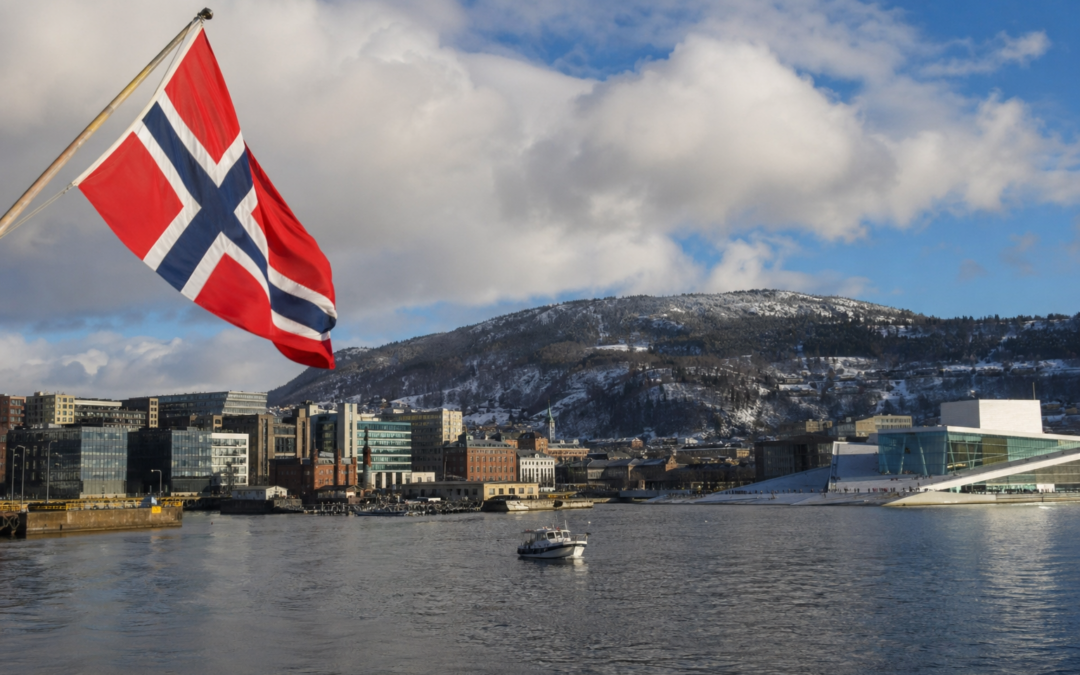
“A $25 billion bet on nation-building projects, without the oil wealth that made Norway rich.”
When Mark Carney unveiled the idea of a Canadian sovereign wealth fund, the comparison to Norway was almost inevitable. Norway’s fund is the gold standard: disciplined, massive, and widely credited with turning oil wealth into lasting national prosperity. For Canadians, the association is reassuring. It suggests prudence, long-term thinking, and shared wealth.
But the comparison doesn’t hold. And understanding why is essential to understanding what Canada is actually building.
Norway’s fund was born from excess. As oil revenues surged in the 1990s, the Norwegian government made a deliberate choice: instead of spending the windfall, it would save and invest it. Today, that fund, worth over $2 trillion, owns roughly 1.5% of the world’s publicly traded companies. It invests almost entirely abroad, shielding Norway’s domestic economy from overheating and volatility. Each year, the government can draw a small portion; around 3%; to support public spending, while preserving the capital for future generations.
It is, at its core, a savings vehicle; a way to convert a finite natural resource into a permanent financial one.
Canada’s proposed fund is something else entirely.
The « Fonds pour un Canada fort », seeded with $25 billion in federal capital, is designed to invest in domestic projects; energy, infrastructure, mining, and other “nation-building” initiatives. It may take equity stakes, generate returns, and even invite participation from individual Canadians. The pitch is compelling: instead of simply subsidizing projects, the country invests in them, shares in the upside, and builds long-term wealth.
But here’s the crucial difference: Canada is not saving a surplus; it is deploying scarce, or borrowed, capital into risky projects.
That distinction changes everything.
In Norway, the question was how to manage abundance. In Canada, the question is how to overcome underinvestment. The fund is less about preserving wealth than about creating it; by stepping into projects that the private sector has been reluctant to finance on its own.
That raises an uncomfortable but unavoidable question: why has private capital held back?
Sometimes, the answer is structural. Large infrastructure and energy projects often require long time horizons, face regulatory uncertainty, or depend on volatile commodity prices. Governments can play a useful role in reducing those risks or crowding in investment.
But sometimes, the answer is simpler: the returns are uncertain, or insufficient.
As one recent critique in La Presse pointed out, many of the types of projects the fund would target, ports, mining developments, and energy infrastructure, already rely heavily on public support. In some cases, governments provide the majority of financing, either directly or through institutions like the Canada Infrastructure Bank.
If those projects were reliably profitable, private investors would likely be lining up.
This is where the tension at the heart of Carney’s proposal becomes clear. The fund is meant to generate returns for Canadians, possibly even attracting individual investors. But those same projects are described as needing public backing precisely because they are risky.
So which is it?
If the returns are strong and predictable, the need for government involvement is less obvious. If the risks are high, then inviting ordinary Canadians to participate becomes harder to justify, especially if, as suggested, their capital might be protected. In that case, the risk does not disappear. It shifts, likely back to the federal balance sheet.
None of this means the idea is misguided. In fact, it reflects a broader shift in the global economy. Governments in the United States, Europe, and Asia are increasingly using public capital to support strategic industries, secure supply chains, and compete in sectors such as energy and technology. Canada faces similar pressures, particularly in a more protectionist and competitive global environment.
The case for more coordinated, large-scale investment is real.
But that makes clarity even more important.
Calling this a “sovereign wealth fund” invites comparisons to Norway that obscure more than they illuminate. Norway’s model works because it is simple, disciplined, and rooted in a clear economic logic: save first, invest globally, spend cautiously. Canada’s approach is more complex and more ambitious. It seeks to reshape the economy by directing capital into specific domestic opportunities.
That is not a savings strategy; it is an industrial strategy.
And industrial strategies come with trade-offs. They can unlock growth, but they can also misallocate capital. They can generate returns, but they can also concentrate risk, especially when political priorities influence investment decisions.
The success of Canada’s new fund will depend less on the label attached to it than on the details that follow: governance, transparency, project selection, and how risks and returns are shared between the public and private sectors.
Norway built wealth from surplus. Canada is trying to build it from risk.
That may be a necessary gamble in a changing world. But it is a gamble nonetheless, and one that deserves to be understood on its own terms, not through the comforting lens of a model it does not truly resemble.