
By Luc Dubé, M. Tax., Taxation Expert
Ottawa’s Real-Time Rail went live on November 9, a week shy of Pix’s sixth birthday. Same engine, same promises. What lands on your phone has nothing in common, and technology has nothing to do with it.
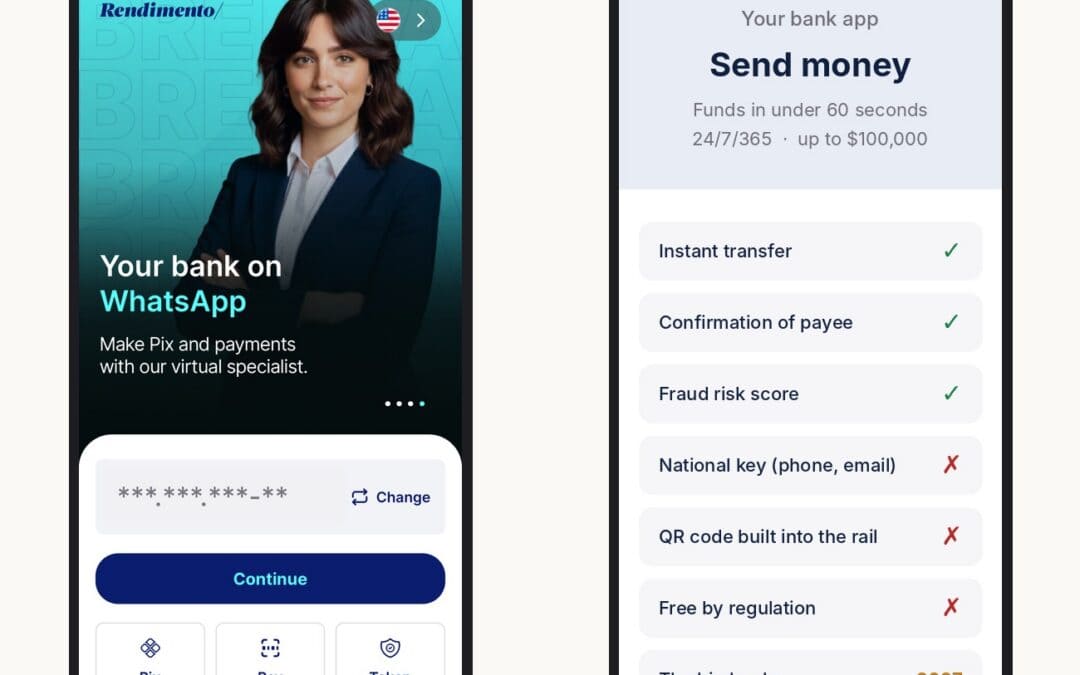
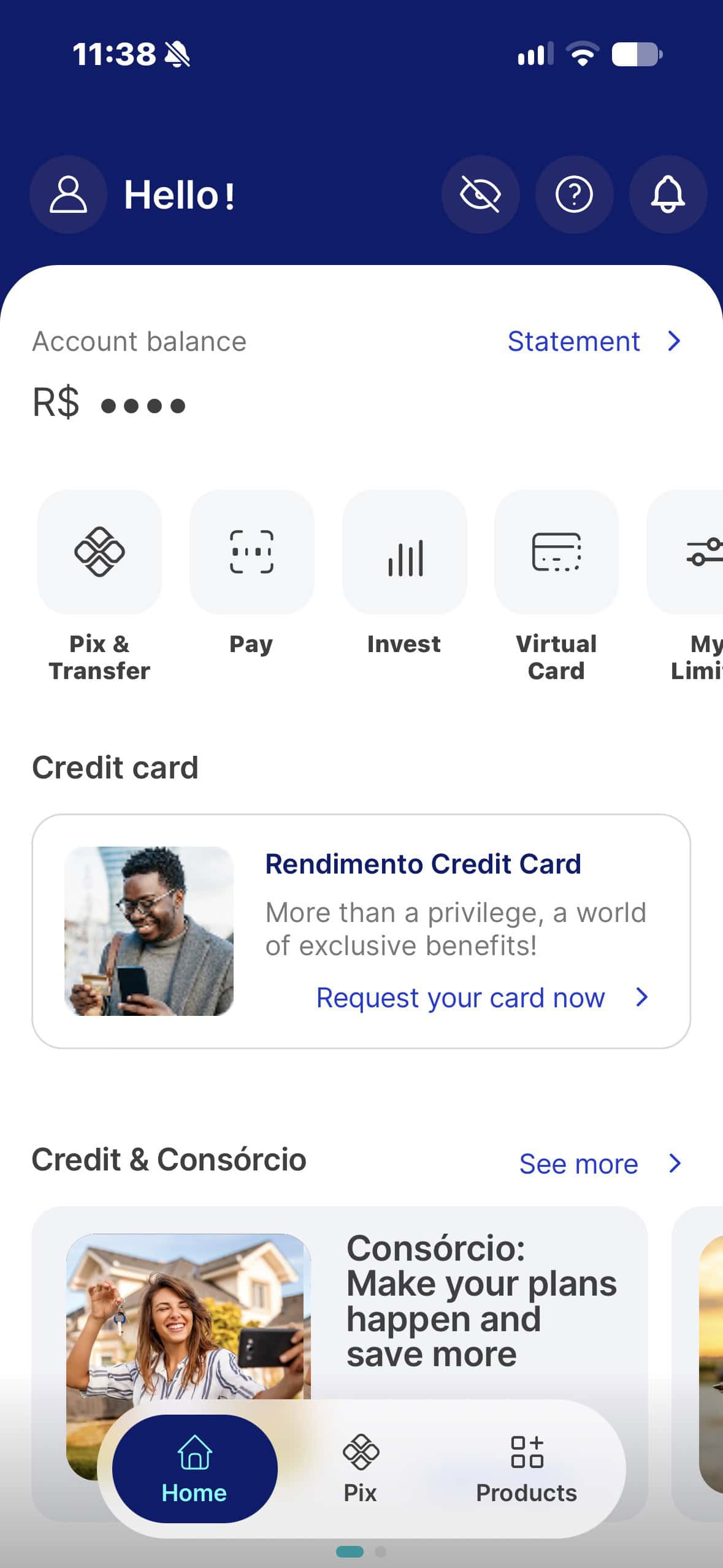
São Paulo, a Tuesday morning. On a smartphone screen: a smiling woman in a navy blazer, the words « Your bank on WhatsApp », three buttons. Pix. Pay. Token. The woman does not exist. Brenda is an artificial intelligence avatar that Banco Rendimento runs on WhatsApp: you write to her as you would to a cousin, and the money moves before you put the phone down. Around here, nobody blinks.
Look for the Canadian version of that screen. Go ahead. You won’t find it.
Eight doors, no big bank
On Monday, November 9, Payments Canada switched on the Real-Time Rail (RTR), the Système de paiement en temps réel in French. More than ten years of work, two suppliers quietly replaced, a launch first promised for 2019. Kicking the can down the road has its limits; this time, the rail exists. Payments clear and settle around the clock, 365 days a year, and the recipient should generally see the money within 60 seconds. Ceiling: $100,000 per transfer. Each one carries ISO 20022 data, the invoice number, the reference, the reason for the payment: exactly what accounting departments have begged for since the fax machine.
The guest list is short. Wealthsimple, Questbank, Peoples Trust, Paramount Commerce, KOHO, DoBusiness.com, Digital Commerce Bank, Bank of America: eight institutions, and not one of the six big Canadian banks. Payments Canada promises they will come « in the coming months » and that nine Canadians in ten will have access within a year. Interac e-Transfer should move over in 2027. International transfers, by the end of that year.
The track is laid. The station is empty.
Brasília gave orders. Ottawa held meetings.
On paper, Pix and the RTR are twins: push payments from account to account, open day and night, settled in central bank money and therefore final the second they land, both fluent in ISO 20022. Same sovereignty sermon too: a homegrown network rather than the tollbooths of Visa and Mastercard.
Then come the numbers. According to the Banco Central do Brasil, Pix handled 79.8 billion transactions in 2025; in its first full year, 9.4 billion. In 2025 alone, some 148 million individuals and 12.8 million businesses sent or received at least one Pix. In the second half of 2025, it carried 54.7 per cent of electronic payment transactions in the country, far ahead of cards. In its first year alone, more than 45 million Brazilians who had not made a single electronic transfer in the previous twelve months started using it.
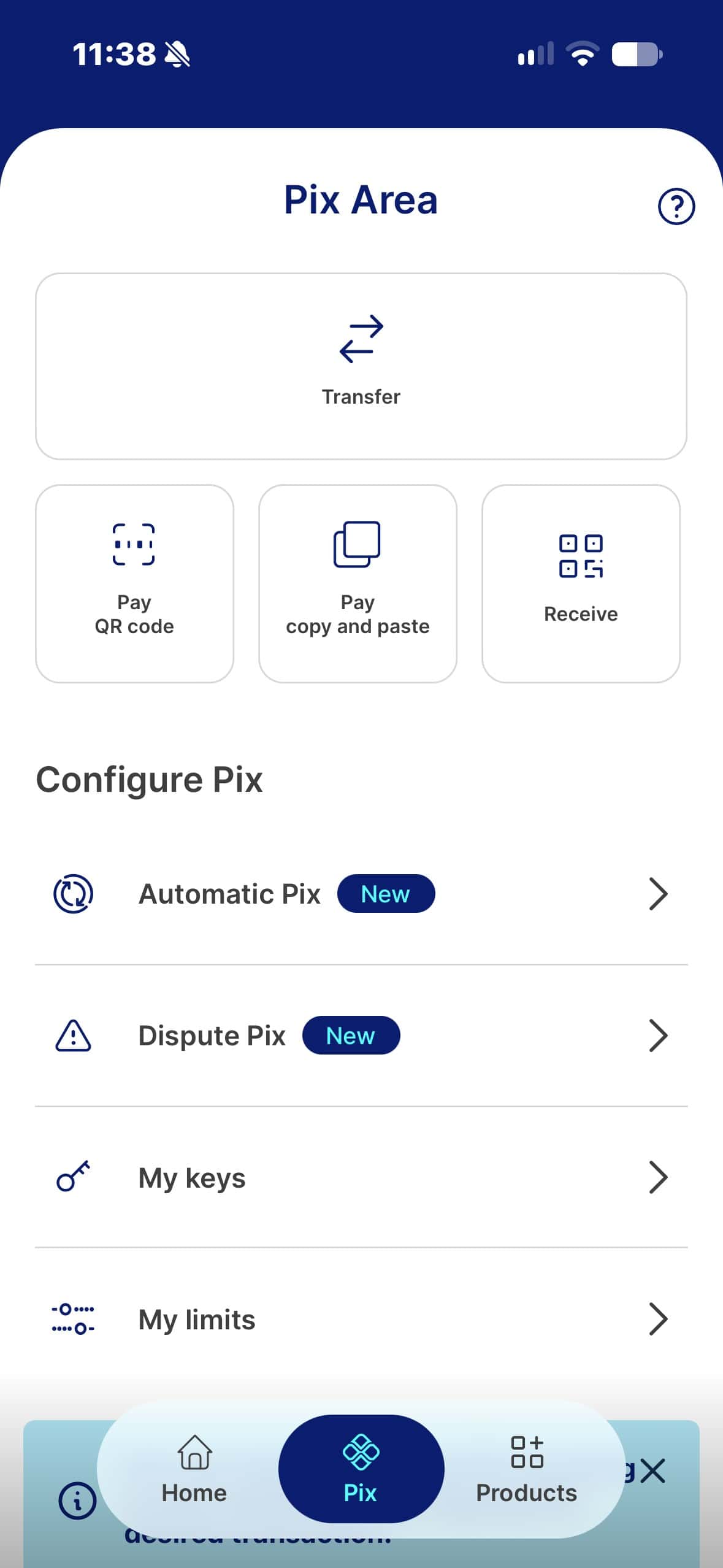
Small wonder. In Brazil, the central bank runs Pix and writes its rules. It did not negotiate; it decided. Any institution with more than 500,000 active accounts had to join, so nobody ever wondered whether the other person « had Pix ». For individuals, sending or receiving a Pix is, as a rule, free; a fee can kick in only when the flows start to look commercial. And the network came with its own phone book, the DICT, where a « Pix key » (a tax number, an email, a phone number or a random string) points to an account: more than a billion keys as of September 30, 2026. QR codes were wired into the system from launch. Same buttons, same experience, in every app in the country, on the same morning.
Canada went the other way. Payments Canada is a public-purpose body that works through its members; the rollout is negotiated, encouraged, staged. Nobody is forced to join. Each institution sets its own prices, and no merchant rate has been published. No public alias directory (the closest thing is Interac’s email-and-phone directory, a private one, due to move onto the rail in 2027), no built-in QR code, nothing resembling the Pix experience out of the box. The private sector will handle it. Someday.
Brasília delivered the train. Ottawa delivered the rails and is waiting for someone to show up with a locomotive.
The FedNow ghost
Mark my words: the risk has a name, and it lives south of the border. FedNow has run in the United States since 2023 on the very model Canada just picked, a public rail with the products left to the market. According to the Federal Reserve, it processed about 6.4 million transactions in the third quarter of 2026. In a country of some 340 million people. A drop in the ocean. The banks’ private RTP network carries many times more, but it is the public rail, the one with nobody forced aboard, that looks like Canada’s.
The trouble is, Canada does not have Brazil’s problem to solve. In 2020, many Brazilians still paid for a bank transfer, and millions had never made one; Pix cured a daily headache. Canadians already have Interac e-Transfer, quick enough, familiar, nearly free. That is the elephant in the room. Households will barely notice the change.
Businesses will. Payroll at 11 p.m. on a Sunday, a supplier paid while the truck is still at the loading dock, cash flow you read live instead of guessing at. And perhaps, one day, a cheaper way to get paid than the card terminal. In Brazil, according to a Bank for International Settlements study co-written by central bank economists, a merchant pays on average about 0.22 per cent to receive a Pix, against a little over 1 per cent for debit. Here at home? No price tag yet.
Locks before the break-in
Oddly enough, arriving six years late has one perk: you get to study the other guy’s bruises.
Irrevocable payments are a gift to fraudsters, and Pix fed a wave of social engineering scams. The Brazilian central bank patched as it went: a default R$1,000 night-time cap between individuals (users can adjust it) and a special refund mechanism (MED, then MED 2.0, adopted in 2025). Then, in 2025, two cyberattacks on connectivity providers siphoned an estimated R$800 million to R$1 billion, then some R$710 million, out of institutions’ reserve accounts; in the second case, R$589 million was blocked. The Pix core held. The subcontractors did not.
Ottawa took notes. Canada is the first G7 country to make centralized fraud services mandatory from day one: confirmation of payee for consumer accounts, a risk score on every transaction, a shared list of fraud indicators, a reporting and intelligence platform, with Interac as technical operator and first provider. Brazil changed the locks after the burglary. Canada installed them before moving in.
One caveat: no Canadian rule yet forces anyone to refund the victim of a scam, while Brazil has its MED. For once, the slow one gets a medal. Bronze, not gold.
Instant money, instant trail
Here is what a tax professional sees. Nobody pays tax on an instant payment. Everybody leaves a trail.
Brazil learned it the noisy way. In September 2024, the Receita Federal extended its e-Financeira reporting to payment institutions (IN 2.219/2024): monthly totals above R$5,000 for individuals and R$15,000 for businesses, not each Pix. In January 2025, a tidal wave of fake news about a « Pix tax » forced Brasília to back down and revoke the text (IN 2.247, January 15, 2025). Seven months later, the Receita came back through another door with IN 2.278, aimed at tax crimes and organized crime, fintechs included. Pix was never taxed. The money flowing through it is watched.
In Canada, the RTR adds no new reporting to the CRA. Therein lies the rub, though: an ISO 20022 message says far more than a cheque ever did, and that data sits on the institutions’ servers. For a named taxpayer, the CRA is one requirement away under section 231.2 of the Income Tax Act; for unnamed persons, it first needs a Federal Court judge’s authorization. Revenu Québec has its own powers. For a business owner, being paid in under a minute changes nothing about when income is recognized. The GST/HST is another story: under the Excise Tax Act, it becomes payable on the earlier of the day the consideration is paid and the day it is due. Get paid while the truck is still at the loading dock, and the tax clock starts that very day. Above all, the trail gets cleaner. Cleaner for you. Cleaner for the auditor.
So who wins? Not you. Yet.
The RTR is a Pix stripped of the three things that made Pix a phenomenon: forced participation, free transfers written into the rules, a national key directory. Whether it becomes Canada’s Pix or Canada’s FedNow will be decided in 2027. Watch the big banks (RBC is aiming for the second quarter). Watch Interac e-Transfer move over. Watch for a published merchant price. Watch for consumer apps, like Montreal’s Bounce, built around QR codes, which plans to plug in next year. And watch the borders: on October 30, Canada and the European Union pledged to connect their instant payment systems. With Brazil, nothing. Not a word.
Meanwhile, in São Paulo, Brenda moves reais in three seconds. In Canada, the pipes are in. The house is still on the drawing board.
Ten years for the plumbing. Let’s hope the rest goes faster.