
The richest one percent of Americans own nearly a third of the country. The bottom half owns almost nothing. The last time the gap ran this wide, it ended in catastrophe, and Canada is on the same curve, one step behind.
In 1929, the year the American economy walked off a cliff, the richest tenth of the country owned roughly eighty-four cents of every dollar of wealth. The top one percent held somewhere between a third and half of everything, depending on whose ledger you trust. It was the summit of the Gilded Age, the country of Rockefeller, Carnegie and Mellon, and most people assumed a republic could not lean that far without toppling.
It leaned that far again. And this time nobody had to crash the market to do it.
A number from 1929
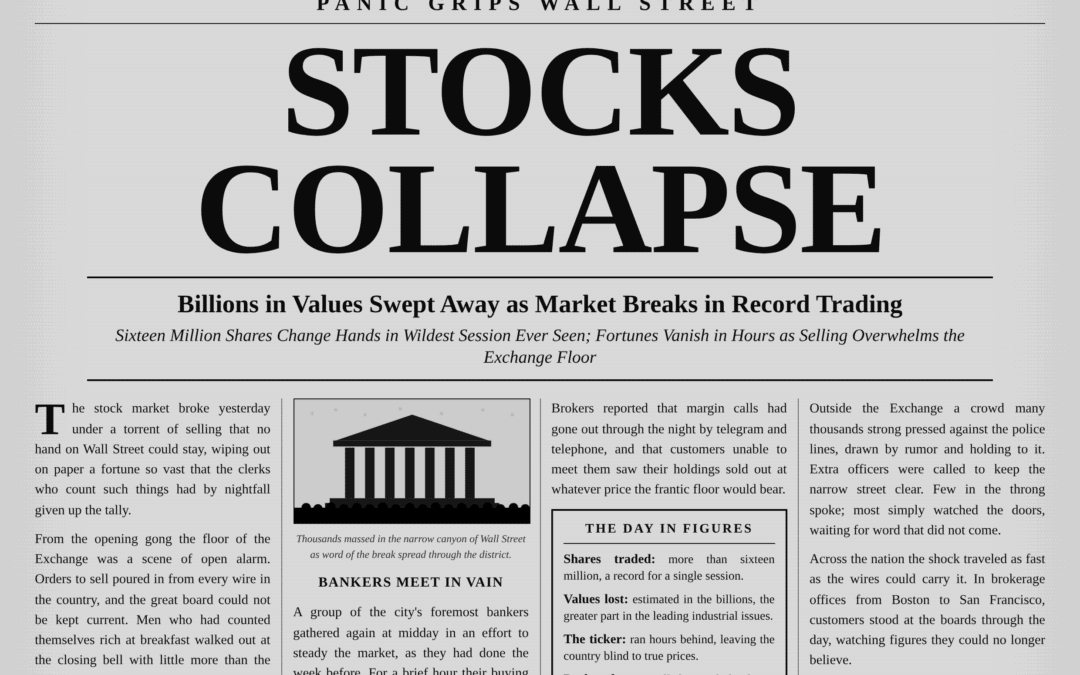
The economists Emmanuel Saez and Gabriel Zucman rebuilt a century of American wealth out of tax records, and the shape they found is not a line. It is a valley. In the late 1920s, the top ten percent of households owned about 84 percent of everything the nation had. The top one-tenth of one percent, a sliver of a sliver, held close to a quarter of it. Estate records tell the same story from another angle: the richest one percent of adults sat on 36 percent of the country’s wealth in 1929. Andrew Mellon was Treasury Secretary. The breadlines were a year away.
Income, the yearly flow rather than the accumulated pile, ran the same way. By the end of the decade, the top one percent were collecting close to a quarter of every dollar earned once you count capital gains, and roughly nineteen cents without them. A record either way, and one that would not be touched again for two generations. Meanwhile, four in five families had no savings at all. None. Wages on the factory floor barely moved across the whole decade while corporate profits climbed more than sixty percent. The new machines, the assembly lines, the radios and refrigerators pouring out of American plants: the gains from all of it flowed to the people who owned the plants, not the people who ran them.
Then the floor gave out.
The fragility nobody counted
Here is the part the cautionary tales leave out. The concentration of the 1920s was not just morally ugly. It was structurally dangerous. A country was building more cars and toasters and houses than its own workers could afford to buy, because the money that would have let them buy sat in a handful of accounts at the top. For a while that gap gets papered over with credit, with installment plans, with a nation of small investors buying stock on borrowed money. It holds right up until it doesn’t.
Historians still argue over what tipped the decade into catastrophe, and the honest answer is a tangle: a young Federal Reserve that let a third of the money supply vanish, a gold standard that handcuffed every government that clung to it, a tariff war that strangled global trade. Inequality did not pull the trigger on its own. But it loaded the room. An economy that pays the many too little to buy what the few produce leans on borrowed money to close the gap, and a structure propped up by debt is a structure with a crack running through it.
Concentration on that scale is not a sign of strength. It is a fault line.
The Great Compression
What followed was the most violent flattening of fortunes in American history, and it has a name: the Great Compression. The Depression torched paper empires. The war pushed top tax rates north of ninety percent. Unions grew teeth, the GI Bill built a middle class, and the suburbs filled with families who owned something for the first time in their lives. By 1949 the top one percent’s share had fallen from 36 percent to under 21. The wealthiest tenth of one percent, who once held a quarter of the country, held seven percent by 1978. Income concentration collapsed in step: the top one percent’s cut of national income dropped to just under eight percent by the early 1970s.
Not all of that leveling was chosen. War did much of it by main force, and years of deliberately cheap money quietly melted the old creditor fortunes. Seen from enough distance, that long stretch of a broad middle class starts to look less like the natural order of things and more like a pause between two versions of the same story.
For half a century, America got flatter. Then it stopped.
Back to where we started
Since the late 1970s, the valley has been climbing back toward its 1929 rim, and it has not slowed. According to the Federal Reserve, the top one percent of Americans held 30.8 percent of the nation’s net worth in the first quarter of 2025, and 31.9 percent by year’s end, the highest share since the Fed began keeping this count in 1989. The top one-tenth of one percent climbed from that seven percent low in 1978 to 22 percent by 2012, almost exactly where it stood on the eve of the Crash. The top ten percent are back above 77 percent.
The income figures are just as blunt. Between 1973 and 2022, the top one percent’s share of national income grew from under eight percent to nearly twenty. Over roughly the same stretch, the richest one percent watched their incomes rise 222 percent. The bottom ninety percent watched theirs fall six.
Up two hundred percent for the few. Down for almost everyone else.
Who owns America now?
Look at the other end of the ladder, and the picture sharpens into something harder to defend. The bottom half of the country, some hundred and seventy million people, owns less than four cents of every dollar of national wealth. The top one-tenth of one percent, meanwhile, holds about as much as the entire bottom ninety percent put together. Stocks, bonds, private companies, second homes, the machinery that turns money into more money: nearly all of it pools at the top, and the pool keeps deepening.
Half the country. Four cents on the dollar. That is not a rounding error. That is the design.
The same curve, drawn quieter
Cross the border, and the melody is familiar, only played softer. Canada rode the same valley. The top one percent’s share of income peaked above 18 percent in 1938, fell to 7.7 percent by 1977, then climbed back toward 14 percent by 2007. By some measures Canadian incomes are now more concentrated than they were in the Roaring Twenties: the richest one-tenth of one percent had clawed back to 5.5 percent of all income by 2007, a height not seen since the days of Mellon and the breadlines. The broader one percent is climbing too, though it has not yet retaken its 1938 peak.
Wealth tells the same tale. The Parliamentary Budget Officer puts the top one percent of Canadian families at roughly a quarter of all the country’s wealth, while the bottom forty percent scrape together somewhere between one and two percent of it. Canadians for Tax Fairness counted 1,685 families in the top one-hundredth of one percent, each worth an average of 448 million dollars, more than four thousand times the wealth of a typical family in the bottom half.
The difference is one of degree, not direction. By 2018, the top tenth held 40 percent of income in Canada against 50 percent in the United States. Since the late 1970s the American top ten percent added about fifteen points to their share; Canada’s added eight. Part of that gap is deliberately Canadian: heavier taxes and transfers, a health system nobody remortgages the house to pay for, unions that held their ground a few years longer. Part of it is simply the same engine turning at lower revs. Milder. Slower. The same road. A Canadian punching the same clock as an American is a little less outgunned. Outgunned all the same.
The blueprint
Two countries, one century, the same letter carved into the record: a U. High in the twenties. Low in the years when a nurse or a machinist could buy a house on one income. High again now, and still climbing.
The shape is the same. The substance is not. The 1920s rich owned factories, railroads, oil wells. Today’s own platforms, portfolios, patents. The 1920s poor owned nothing. Today’s have a phone, a car financed to the last dollar, and more debt than their grandparents could have pictured. The floor has changed. The weight pressing down on it has not.
And it is not only the top-line numbers that rhyme with 1929. Wages that trail the cost of living. Households leaning harder on debt each year. Asset prices floating free of what most people actually earn. A politics that answers, first and most attentively, to the people who own the assets. We have rebuilt the skyline of the old Gilded Age. We have poured its foundations too.
The economists argue about the decimal points. The direction is not in dispute.
This does not have to end the way 1929 did. We have what that era lacked: a central bank that knows how to flood a panic with cash, deposit insurance that kills a bank run on sight, a safety net built to catch part of the fall. The building is tilted, but the floor is braced better than it was. The danger now is quieter, and slower. It is a country where the ladder gets pulled up behind the people already at the top, where fortunes are inherited rather than earned, where a government listens hardest to those who need it least. You do not need a market crash for that to hollow out a democracy. You only need time, and patience, and a story that tells everyone it is normal.
We were told the Gilded Age was a warning. We built it anyway. The only question left is what we choose to put under all that weight, while we still have the choice.