The Zenbooks Financial Clarity Index 2026 gives Canadian small businesses 56.7 out of 100. I tested that number against the statute, the case law and the buyer’s reading, from coast to coast. The full study, Canada Edition, is free to download as a PDF.
By Luc Dubé, M. Tax., Taxation Expert
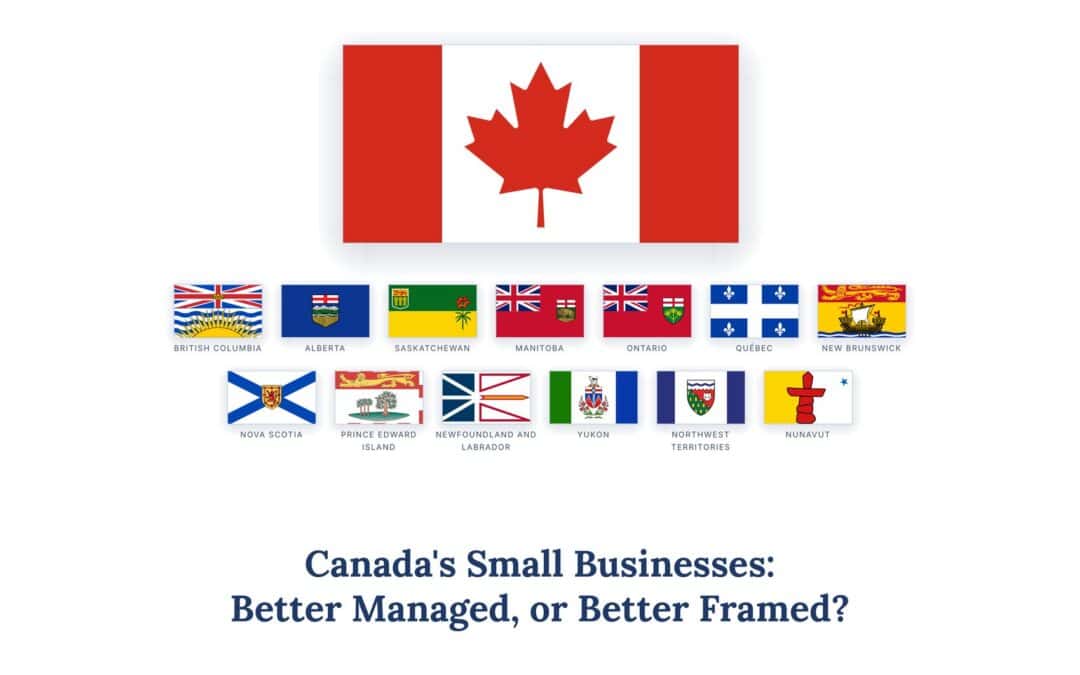
A national score, thirteen jurisdictions
In the spring of 2026, Zenbooks surveyed 565 owners and decision-makers of Canadian small and medium-sized businesses and built an index of “financial clarity” scored out of 100. The national result is 56.7. More than three owners in four rate their own finances good or excellent; fewer than one in two actually score in that range.
A score like that is where the work begins. It has yet to sit in front of a judge, or across the table from a buyer. Hence the question in the title, carried over from the Québec edition published on November 3: are these businesses better managed, or better framed by the rules around them?
What the guide covers
Eric Saumure, CPA, CA, principal of Zenbooks and principal author of the index, supplied the report, the methodology, the data workbook and the scoring grid, and left me complete editorial freedom. Zenbooks provided the data only; no compensation or other consideration was exchanged.
Part I deals with Canada as a whole:
- fair market value, and what a buyer really retains from a small business;
- cash reserves, the lifetime capital gains exemption and the small business limit;
- the owner’s pay, salary or dividend, and how the law treats each;
- the legal duty to keep books and records, and what the tax authorities can do when they fall short;
- what the surveys show about the financial literacy of Canadian owners.
Part II then travels from British Columbia to Newfoundland and Labrador, one province at a time, and ends with the three territories. Each chapter states what the index can and cannot say about that province, and sets out the 2026 tax parameters that shape how its owners pay themselves, keep cash and sell. The Québec chapter summarizes the French-language edition in English.
Where the numbers bend
On November 3, Zenbooks answered the Québec edition by re-scoring its own data. The headline findings held: the national score stays between 55.6 and 58.0 under every scenario it ran. Québec’s lead proved more fragile. With every challenged question removed, it falls to 4.0 points, and Zenbooks now writes that the Québec score should be read as “the highest estimate, not a statistically established ranking”.
Then there is the cash. The index awards full marks for six months of reserves and an emergency fund. Left too long inside the operating company, that same cash can cost the owner the capital gains exemption on a sale. At the 2026 limit, the tax at stake runs from about $284,000 in Nunavut to about $349,000 in Newfoundland and Labrador, at most. Once invested, the reserve can also wear down the small business limit.
The guide is written for owners who are thinking about a sale, a transfer to the next generation or cleaner books, and for the practitioners who advise them: every authority is cited, and an annex states whether each passage was read in the primary source.
The short version? Chapter 8 fits it into a single table: each index question, the authority that governs it, and the check a buyer or an auditor would actually run.
Read the guide (PDF, 47 pages)
General information, current to November 4, 2026. Neither this text nor the study is tax, legal, accounting or valuation advice adapted to a particular situation, and neither creates a professional relationship. Laws, rates, limits and administrative positions change; some measures cited have been announced but not yet enacted. The data of the Zenbooks Financial Clarity Index 2026 belong to their authors. Before any transaction, have your facts reviewed by a qualified professional.